Game Boy
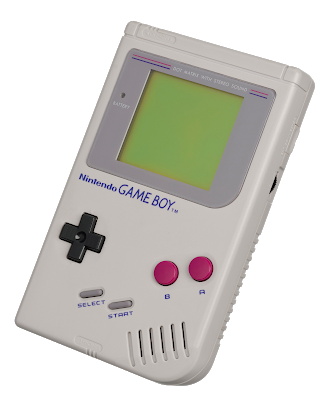
In this post i try to show you one of the amazing devices i used to play games every day, yes i know is this an another post about the Game Boy, and it is because i love so much this handled console i have few of this and a few games to play everyday in every moment, and you think at the end of this post i just talk a few moment, but i like the wikipedia page for the history of this device.
History
By Wikipedia
The Game Boy is an 8-bit handheld game console developed and manufactured by Nintendo. The first handheld in the Game Boy family, it was first released in Japan on April 21, 1989, then North America, three months later, and lastly in Europe, nearly a year after. It was designed by the same team that developed the Game & Watch and several Nintendo Entertainment System games: Satoru Okada, Gunpei Yokoi, and Nintendo Research & Development 1.
Nintendo’s second handheld game console, the Game Boy combines features from both the NES home system and Game & Watch hardware. The console features a dull green dot-matrix screen with adjustable contrast dial, five control buttons (a directional pad, two game buttons, and start and select), a single speaker with adjustable volume dial, and, like its rivals, uses cartridges as physical media for games. The color scheme is made from two tones of grey with accents of black, blue, and dark magenta. All the corners of the portrait-oriented rectangular unit are softly rounded, save for the bottom right, which is curved. At launch, it was sold either as a standalone unit, or bundled with one of several games: Super Mario Land or Tetris among them. Several accessories were also developed, including a carrying pouch and printer.
Despite being technically inferior to its fourth-generation competitors (Sega’s Game Gear, Atari’s Lynx, and NEC’s TurboExpress), the Game Boy received praise for its battery life and durability in its construction. It quickly outsold the competition, selling one million units in the United States within a few weeks. The Game Boy and its successor, the Game Boy Color, have sold an estimated 118 million units worldwide. It is one of the most recognizable devices from the 1990s, becoming a cultural icon in the years following its release. Several redesigns were released during the console’s lifetime, including the Game Boy Pocket (1996) and the Game Boy Light (1998; Japan only). Production of the Game Boy continued into the early 2000s, even after the release of its successor, the Game Boy Advance, in 2001. Production ceased in 2003.
Redesigns
Classic Game Boy family
Game Boy
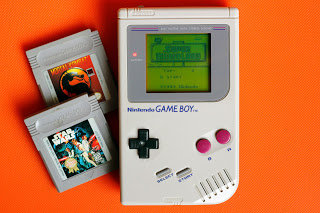
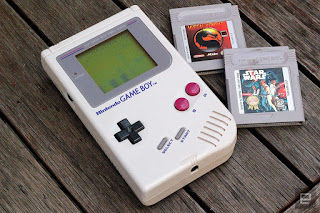
The original gray Game Boy was first released in Japan on April 21, 1989. Based on a Z80 processor, it has a black and green reflective LCD screen, an eight-way directional pad, two action buttons (A and B), and Start and Select buttons with the controls being identical to the NES controller. It plays games from ROM-based media contained in cartridges (sometimes called carts or Game Paks). Its graphics are 8-bit (similar to the NES).
The game that pushed the Game Boy into the upper reaches of success was Tetris. Tetris was widely popular, and on the handheld format could be played anywhere. It came packaged with the Game Boy, and broadened its reach; adults and children alike were buying Game Boys in order to play Tetris. Releasing Tetris on the Game Boy was selected as #4 on GameSpy’s “25 Smartest Moments in Gaming”.
The original Game Boy was one of the first cartridge-based systems that supported more than four players at one time (via the link port). In fact, it has been shown that the system could support 16 simultaneous players. However, this feature was only supported in Faceball 2000.
In 1995, the “Play it Loud” version of the original Game Boy was released in five different colors; red, yellow, green, blue , white and clear. With sports variations in between.
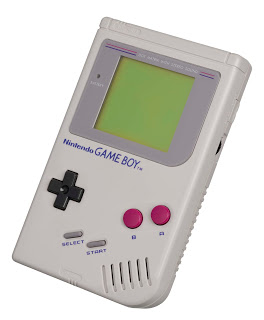
Game Boy Pocket
The Game Boy Pocket is a redesigned version of the original Game Boy having the same features. It was released in 1996. Notably, this variation is smaller and lighter. It comes in seven different colors; red, yellow, green, black, clear, silver, blue, and pink.
Another notable improvement over the original Game Boy is a black-and-white display screen, rather than the green-tinted display of the original Game Boy, that also featured improved response time for less blurring during motion. The Game Boy Pocket takes two AAA batteries as opposed to four AA batteries for roughly ten hours of gameplay. The first model of the Game Boy Pocket did not have an LED to show battery levels, but the feature was added due to public demand.
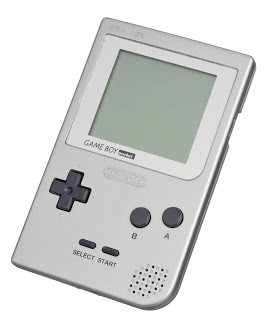
Game Boy Light
In April 1998, a variant of the Game Boy Pocket named Game Boy Light was exclusively released in Japan. The differences between the original Game Boy Pocket and the Game Boy Light is that the Game Boy Light takes on two AA batteries for approximately 20 hours of gameplay (when playing without using the light), rather than two AAA batteries, and it has an electroluminescent screen that can be turned on or off. This electroluminescent screen gave games a blue-green tint and allowed the use of the unit in darkened areas. Playing with the light on would allow about 12 hours of play. The Game Boy Light also comes in six different colors; silver, gold, yellow for the Pokémon edition, translucent yellow, clear and translucent red for the Astro Boy edition. The Game Boy Light was superseded by the Game Boy Color six months later and was the only Game Boy to have a backlit screen until the release of the Game Boy Advance SP AGS-101 model in 2003.
Game Boy Color Family
Game Boy Color
First released in Japan on October 21, 1998, the Game Boy Color (abbreviated as GBC) added a (slightly smaller) color screen to a form factor similar in size to the Game Boy Pocket. It also has double the processor speed, three times as much memory, and an infrared communications port. Technologically, it was likened to the 8-bit NES video game console from the 1980s although the Game Boy Color has a much larger color palette (56 simultaneous colors out of 32,768 possible) which had some classic NES ports and newer titles. It comes in seven different colors; Clear purple, purple, red, blue, green, yellow and silver for the Pokémon edition. Like the Game Boy Light, the Game Boy Color takes on two AA batteries. It was the final handheld to have 8-bit graphics.
A major component of the Game Boy Color is its near-universal backward compatibility; that is, a Game Boy Color is able to read older Game Boy cartridges and even play them in a selectable color palette (similar to the Super Game Boy). The only black & white Game Boy games known to be incompatible are Road Rash and Joshua & the Battle of Jericho. Backwards compatibility became a major feature of the Game Boy line, since it allowed each new launch to begin with a significantly larger library than any of its competitors. Some games written specifically for the Game Boy Color can be played on older model Game Boys, whereas others cannot.
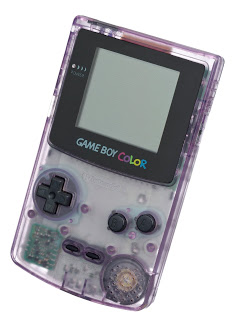
Game Boy Advance family
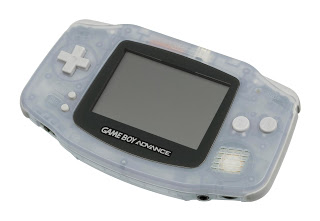
Game Boy Advance
In Japan, on March 21, 2001, Nintendo released a significant upgrade to the Game Boy line. The Game Boy Advance (also referred to as GBA) featured a 32 bit 16.8 MHz ARM. It included a Z80 processor and a switch activated by inserting a Game Boy or Game Boy Color game into the slot for backward compatibility, and had a larger, higher resolution screen. Controls were slightly modified with the addition of “L” and “R” shoulder buttons. Like the Game Boy Light and Game Boy Color, the Game Boy Advance takes on two AA batteries. The system was technically likened to the SNES and showed its power with successful ports of SNES titles such as Super Mario World, Super Mario World 2: Yoshi’s Island, The Legend of Zelda: A Link to the Past and Donkey Kong Country. There were also new titles that could be found only on the GBA, such as Mario Kart: Super Circuit, F-Zero: Maximum Velocity, Wario Land 4, Mario & Luigi: Superstar Saga and more. A widely criticized drawback of the Game Boy Advance is that the screen is not backlit, making viewing difficult in some conditions. The Game Paks for the GBA are roughly half the length of original Game Boy cartridges and Game Boy Color cartridges, and so older Game Paks would stick out of the top of the unit. When playing older games, the GBA provides the option to play the game at the standard equal square resolution of the original screen or the option to stretch it over the wider GBA screen. The selectable color palettes for the original Game Boy games are identical to what it was on the Game Boy Color. The only Game Boy Color games known to be incompatible are Pocket Music and Chee-Chai Alien. It was the final handheld to require regular batteries.
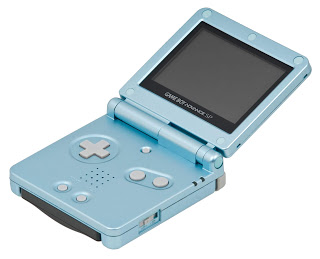
Game Boy Advance SP
First released in Japan on February 14, 2003, the Game Boy Advance SP—Nintendo model AGS-001—resolved several problems with the original Game Boy Advance model. It featured a new smaller clamshell design with a flip-up screen, a switchable internal frontlight, a rechargeable battery for the first time, and the only notable issue is the omission of the headphone jack, which requires a special adapter, purchased separately. In September 2005, Nintendo released the Game Boy Advance SP model AGS-101, that featured a high quality backlit screen instead of a frontlit, similar to the Game Boy Micro screen but larger. It was the final Game Boy and last handheld to have backwards compatibility with Game Boy and Game Boy Color games.
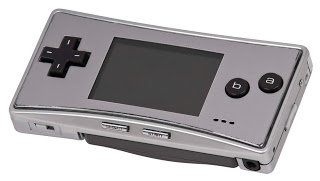
Game Boy Micro
The third form of Game Boy Advance system, the Game Boy Micro is four and a half inches wide (10 cm), two inches tall (5 cm), and weighs 2.8 ounces (80 g). By far the smallest Game Boy created, it has approximately the same dimensions as an original NES controller pad. Its screen is approximately 2/3 the size of the SP and GBA screens while maintaining the same resolution (240×160 pixels) but now has a higher quality backlit display with adjustable brightness. Included with the system are two additional faceplates which can be swapped to give the system a new look; Nintendo of America sold additional faceplates on its online store. In Europe, the Game Boy Micro comes with a single faceplate. In Japan, a special Mother 3 limited edition Game Boy Micro was released with the game in the Mother 3 Deluxe Box. Unlike the Game Boy Advance and Game Boy Advance SP, the Game Boy Micro is unable to play any original Game Boy or Game Boy Color games, only playing Game Boy Advance titles (with the exception of the Nintendo e-Reader, discontinued in America, but still available in Japan).
Game Paks
Each video game is stored on a plastic cartridge, officially called a “Game Pak” by Nintendo. All cartridges, excluding those for Game Boy Advance, measure 5.8 by 6.5 cm. The cartridge provides the code and game data to the console’s CPU. Some cartridges include a small battery with SRAM, flash memory chip, or EEPROM, which allows game data to be saved when the console is turned off. If the battery runs out in a cartridge, then the save data will be lost, however, it is possible to replace the battery with a new battery. To do this, the cartridge must be unscrewed, opened up, and the old battery would be removed and replaced. This may require desoldering the dead battery and soldering the replacement in place. Before 2003, Nintendo used round, flat watch batteries for saving information on the cartridges. These batteries were replaced in newer cartridges because they could only live for a certain amount of time.
The cartridge is inserted into the console cartridge slot. If the cartridge is removed while the power is on, and the Game Boy does not automatically reset, the game freezes; the Game Boy may exhibit unexpected behavior, such as rows of zeros appearing on the screen, the sound remaining at the same pitch as was emitted the instant the game was pulled out, saved data may be corrupted, and hardware may be damaged. This applies to most video game consoles that use cartridges.
The original Game Boy power switch was designed to prevent the player from being able to remove the cartridge while the power is on. Cartridges intended only for Game Boy Color (and not for the original Game Boy) lack the “notch” for the locking mechanism present in the top of the original cartridges, preventing operation on an original Game Boy (the cartridge can be inserted, but the power switch cannot be moved to the “on” position). Even if this was bypassed by using a Game Boy Pocket, Game Boy Light, or Super Game Boy (and its Japanese-only follow-up), the game would not run, and an image on the screen would inform the user that the game is only compatible with Game Boy Color systems. One exception would be the Kirby Tilt ‘n’ Tumble game: despite the game cartridge featuring a notch, enabling it to be inserted on the original Game Boy, the game displays an error message indicating that it only plays on Game Boy Color. Chee Chai Alien and Pocket Music are incompatible with Game Boy Advance models, displaying an error message indicating that they only play on Game Boy Color.
Game Boy Advance cartridges used a similar physical lock-out feature. Notches were located at the base of the cartridge’s two back corners. One of these notches was placed as to avoid pressing a switch inside the cartridge slot. When an older Game Boy or Game Boy Color game was inserted into the cartridge slot, the switch would be pressed down and the Game Boy Advance would start in Game Boy Color mode, while a Game Boy Advance cartridge would not touch the switch and the system would start in Game Boy Advance mode. The Nintendo DS replaced the switch with a solid piece of plastic that would allow Game Boy Advance cartridges to be inserted into Slot 2, but would prevent an older Game Boy or Game Boy Color cartridge from being inserted fully into the slot.
Excluding game-specific variations, there are four types of cartridges compatible with Game Boy systems:

The original grey Game Boy Game Pak
- Grey cartridges (Also known as class A) are compatible with all Game Boy systems, excluding Game Boy Micro. All original Game Boy games are of this type. Some of these cartridges are in alternative colors, such as red or blue for Pokémon Red and Blue, and yellow for the Donkey Kong Land series. The games on these cartridges are programmed in black and white; the Game Boy Color and later systems provide selectable color palettes for them. Some grey cartridges that were released between 1994 and 1998 have Super Game Boy enhancements. Even fewer grey cartridges were released with built-in features that made them protrude from the slot, but included the notch to be compatible with the original Game Boy (notably the Game Boy Camera)

The black Game Boy Game Pak
- Black cartridges (Also known as class B or Dual Mode) are compatible with all Game Boy systems, excluding Game Boy Micro. Although the games on these cartridges are programmed in color, they can still be played in monochrome on Game Boy, Game Boy Pocket, Game Boy Light and Super Game Boy (and its Japanese follow-up). Examples of black-cartridge games are Pokémon Yellow: Special Pikachu Edition, Pokémon Gold and Silver (however, the actual colors of these three cartridges are yellow, gold, and silver, respectively). Games such as Wario Land II and The Legend of Zelda: Link’s Awakening DX were full-color re-releases of gray-cartridge games but with additional content only available on the Game Boy Color. Some black cartridges have Super Game Boy enhancements.[citation needed] Even some games had built-in features similar to what the later clear cartridges did, like rumble features (Pokémon Pinball) and infrared receiver (Robopon Sun, Star, and Moon Versions).

The clear Game Boy Color Game Pak
- Clear cartridges (Also known as class C) are compatible with Game Boy Color and later systems, excluding Game Boy Micro. Some games (such as Pokémon Crystal) were released in specially colored cartridges, as had been done before, but the new colors remained translucent. Some clear cartridges have built-in features, including rumble features (Perfect Dark) and tilt sensors (Kirby Tilt ‘n’ Tumble). These cartridges are a slightly different shape from the earlier varieties, and would obstruct the latch if inserted into the original Game Boy. Unlike the Gray cartridges and Black cartridges, the Clear cartridges cannot be played on a Game Boy Pocket, a Game Boy Light or on Super Game Boy (or even its Japanese follow-up).[citation needed] Some class C cartridges (European version of V-Rally: Championship Edition) used a solid cartridge design, like in Class B.

The Game Boy Advance Game Pak
- Advance cartridges (Also known as class D) are half the size of all earlier cartridges and are compatible with Game Boy Advance and later systems including the Nintendo DS. Some cartridges are colored to resemble the game (usually for the Pokémon series; Pokémon Emerald, for example, being a clear emerald green). They are also compatible with Nintendo DS and DS Lite (but see the Reception section for limitations). Some Advance cartridges have built-in features, including rumble features (Drill Dozer), tilt sensors (WarioWare: Twisted!, Yoshi’s Universal Gravitation) and solar sensors (Boktai).
My Nintendo Family
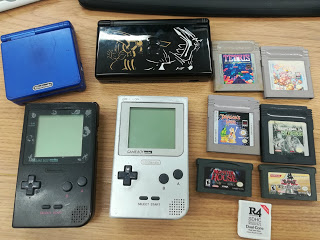
Instead of all history tell before, i show you one of my Nintendo family.
- 2 Game Boy Pocket
- 1 Game Boy Advance SP
- 1 Nintendo DS Lite
- 4 Game Boy Packs
- 2 Game Boy Advance Packs
- 1 Nintendo DS R4
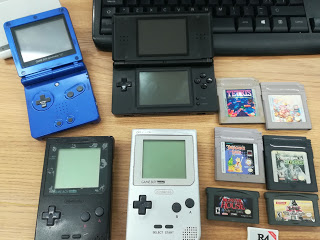
Like you see the Game Boy Family was an exceptional playing devices, now the family continues in the Nintendo 3DS Systems and Nintendo Switch, not also like the Game Boy but very powerful devices.
 RetroGemu </